
ISWA 2016 PUBLICATIONS
Waste management in mountainous areas
An unsustainable waste management system in mountainous areas creates risks not only for the ecosystems and health of the populations in these regions but also for the downstream areas.
Problems caused by poor waste management in mountainous areas affect local communities, tourism, surface and groundwater quality, ecosystem development, and in some cases, these issues have a more significant impact than waste management activities in hilly and plain areas.
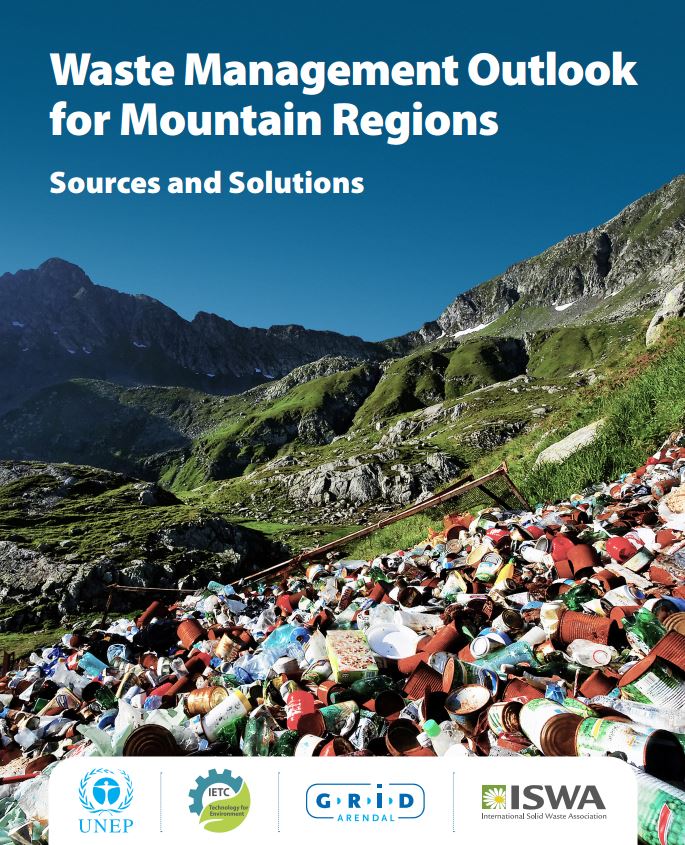
In 2016, ISWA, in collaboration with UNEP, published a report titled “Perspectives on Waste Management in Mountain Areas,” which presents the sources of waste generation, solutions for minimization, treatment, and disposal, as well as case studies.
The report concludes with specific recommendations for implementing and operating sustainable management systems in mountainous areas, such as:
i) implementing comprehensive monitoring programs;
ii) strengthening the capacity of local authorities responsible for waste management;
iii) increasing awareness among the population, tourists, etc.;
iv) implementing modular technical solutions with small capacity for waste collection and transportation;
v) ensuring and controlling the responsibility of industrial waste generators from the public and private sectors (e.g., mining operations, farms), etc.